
Incoming and build checks
Steel, mold base, hot runner, inserts, electrodes and components should match the agreed route.
Tooling quality should be visible through checkpoints, documents and correction logs, not only final claims about precision.
ToolingPilot pages should teach buyers to ask for evidence before accepting T1 samples, export mold packing or production handoff.
Steel, mold base, hot runner, inserts, electrodes and components should match the agreed route.
Mold fitting, movement, water lines, ejection and first trial findings should be documented.
T1 samples need measurements, appearance standards and material confirmation.
Export molds need spare parts, trial report, packing list and corrosion protection before shipping.
These answers clarify document types, T1 gates and correction logic buyers should expect before mold acceptance.
ToolingPilot can plan T1 dimensional checks, FAI or selected CMM reports on request, material confirmation, cosmetic review, correction logs and export mold acceptance records.
Before mold acceptance, buyers should approve T1 samples, critical dimensions, cosmetic limits, material route, correction status, mold ownership and handoff documents.
T1 issues should become a correction log with defect, likely cause, mold action, owner, due date, retest result and buyer approval status.
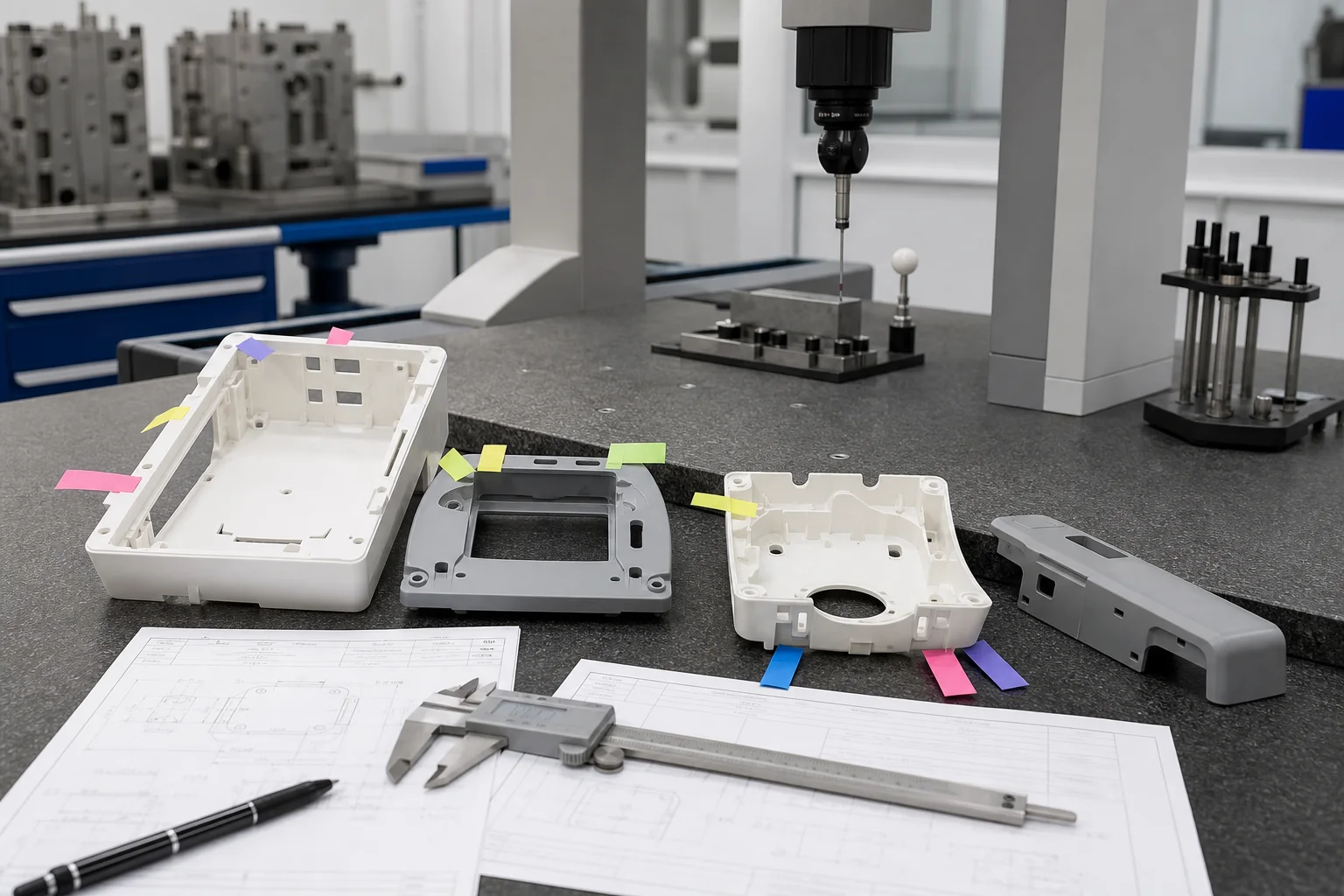
The T1 stage is where buyer trust is won or lost. A professional tooling partner should turn sample issues into a traceable action list.
| Evidence | Why it matters |
|---|---|
| T1 sample photos and notes | Shows what was actually molded and which defects remain. |
| Dimensional or FAI report | Confirms critical dimensions against drawing intent. |
| Correction log | Turns defects into owners, actions and re-trial gates. |
| Material confirmation | Prevents resin, color or grade ambiguity before handoff. |
| Export mold checklist | Documents spare parts, water/electric standards, packing and anti-rust protection. |