
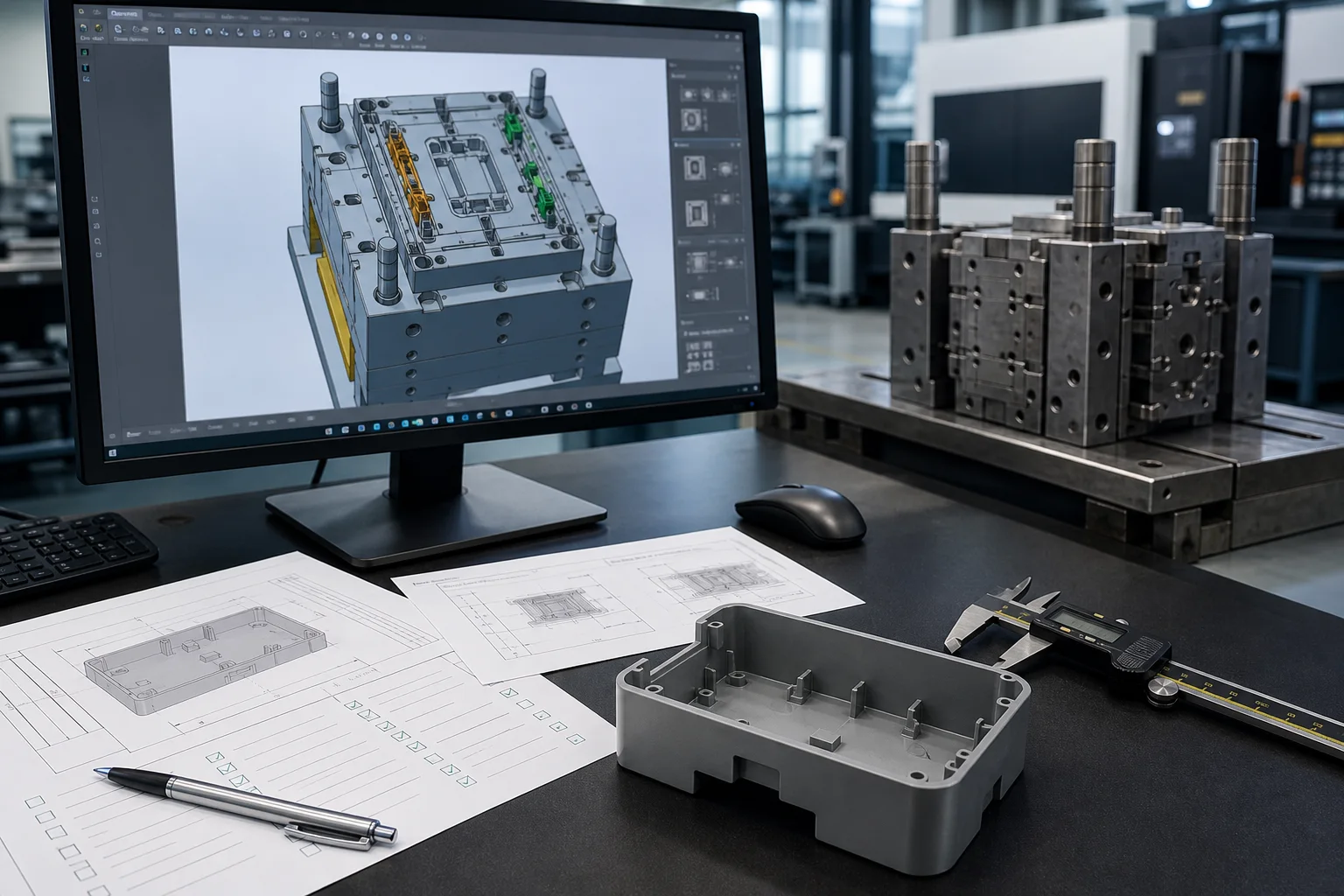
Injection Mold Design review path
DFM, mold concept, parting line, gate, runner, cooling, ejection, slider and steel decisions before mold build.
Define the file status and tooling purposeReview geometry, material and sample riskClarify mold structure and quote assumptionsPlan T1 evidence and correction gates
Buyer stage and RFQ focus
| Decision area | What to clarify |
|---|---|
| Best-fit buyer need | CAD-ready or prototype-tested plastic parts where the buyer needs a mold concept, risk notes and tooling assumptions before deposit. |
| Quote variables | 3D CAD, 2D drawing, material, surface finish, tolerance, visible faces, expected quantity, mold life and T1 approval criteria. |
| Evidence to request | DFM notes, mold concept screenshots, parting-line and gate assumptions, slider/lifter notes and review questions before steel cut. |
What the buyer should receive
| Deliverable | Why it matters |
|---|---|
| DFM risk note | A practical list of wall, draft, rib, boss, undercut, tolerance and cosmetic risks before steel approval. |
| Mold concept assumptions | Parting line, gate, runner, cooling, ejection, slider, lifter and insert assumptions that shape the quote. |
| Buyer decision list | Open choices the buyer should answer before deposit, such as visible marks, sample priority and mold purpose. |
| T1 acceptance plan | The first-sample checks that should prove geometry, appearance, fit and correction status. |
Red flags before deposit
Visible surfaces are not marked before parting-line, gate and ejector decisions.CAD is sent without target resin, texture, tolerance or critical dimensions.Undercuts, snap fits or brass inserts are present but no side-action assumption is discussed.The quote gives a mold price but does not explain what will be checked at T1.
Questions to answer before quoting
Which faces cannot show gate vestige, ejector marks or parting-line witness?Which dimensions or assembly surfaces decide whether the mold is accepted?Should the mold be steel-safe for likely engineering changes after first samples?Is the next goal design validation, production launch or export mold handoff?
How buyers should use this route
This page helps the buyer decide whether the project is ready for mold quotation, still needs DFM cleanup, or should start with prototype or rescue review. A useful inquiry explains project stage, part function, tooling purpose, production expectation and the evidence needed after T1.