
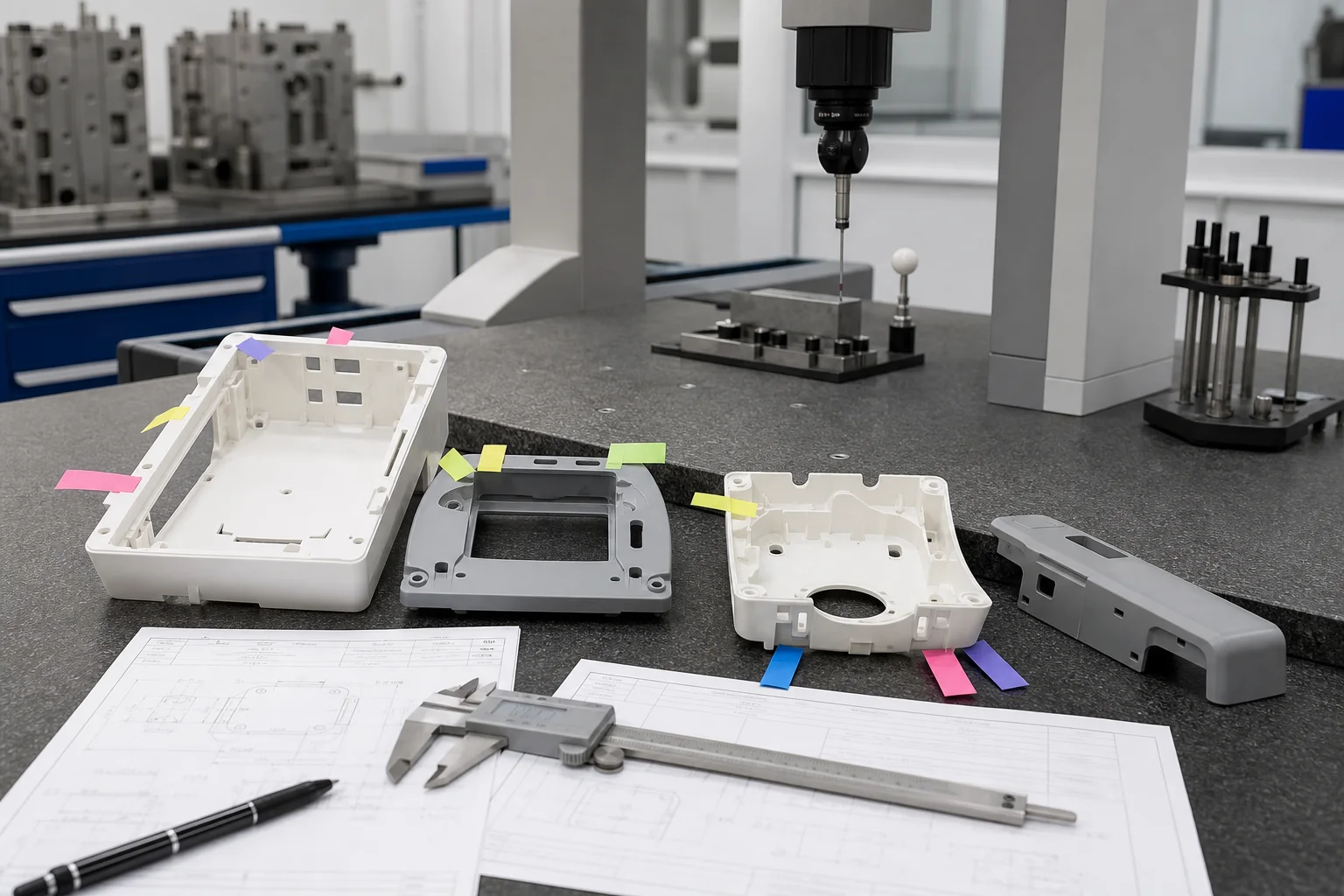
Mold Modification & Repair review path
Engineering-change, supplier-rescue and tooling correction support for molds with T1 issues, flash, warpage, sink, ejection or fit problems.
Define the file status and tooling purposeReview geometry, material and sample riskClarify mold structure and quote assumptionsPlan T1 evidence and correction gates
Buyer stage and RFQ focus
| Decision area | What to clarify |
|---|---|
| Best-fit buyer need | Buyers with existing molds, poor first samples, unstable dimensions, visible defects or supplier communication issues. |
| Quote variables | Mold photos, sample photos, defect notes, drawings, inspection reports, trial parameters, current supplier feedback and access to the mold. |
| Evidence to request | Issue diagnosis, correction action, re-trial criteria, revised sample review and risk note if the mold cannot be economically recovered. |
What the buyer should receive
| Deliverable | Why it matters |
|---|---|
| Evidence intake | Samples, photos, drawings, trial parameters and supplier notes organized before diagnosis. |
| Root-cause options | A separation of part-design, mold-structure, process and material causes where evidence allows. |
| Correction route | Welding, insert change, gate change, venting, cooling, texture, polishing or engineering-change options. |
| Re-trial gate | The checks that prove whether the repair solved the issue or reached a commercial limit. |
Red flags before deposit
Only defect photos are available, with no trial parameters or material information.The mold cannot be inspected, transferred or opened for a realistic repair quote.The requested fix requires adding steel where no steel-safe allowance exists.The buyer expects a guaranteed rescue before root-cause evidence is reviewed.
Questions to answer before quoting
What changed between the approved design, mold build and failed sample condition?Can the mold be inspected directly, or only reviewed through samples and supplier reports?Which defects block acceptance, and which are cosmetic preferences?What is the maximum acceptable cost and time before rebuilding becomes the better option?
How buyers should use this route
This page helps the buyer decide whether the project is ready for mold quotation, still needs DFM cleanup, or should start with prototype or rescue review. A useful inquiry explains project stage, part function, tooling purpose, production expectation and the evidence needed after T1.